
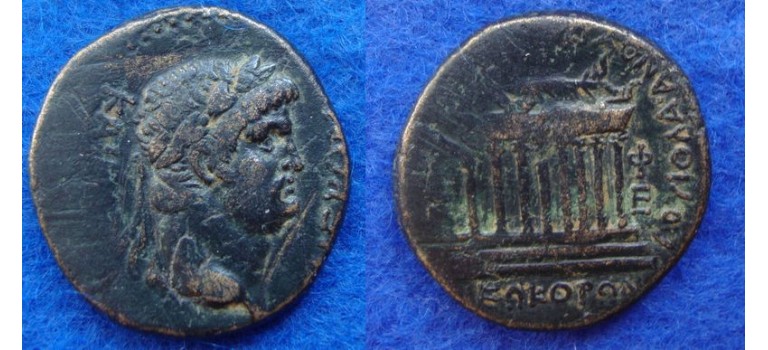
IONIA, Ephesus. Nero. AD 54-68. Æ (26mm,
14,4 g). Marcus Acilius Aviola, proconsul; Aechmocles, magistrate. Struck
AD 65-66. Laureate head right / Three-quarter view of temple. RPC 2626; SNG
München -; SNG von Aulock 7863; SNG Copenhagen -; BMC -; Waddington 1620. VF, Rare and attractive.
RPC (p. 433) notes that this type with NEOKORΩN in the reverse legend...“is the
earliest occurrence of this word on coins, and it is generally thought that it
does not refer to the establishment of the imperial cult at Ephesus but to the
position of Ephesus as the ‘temple-keeper’ of the Temple of Artemis (J. Keil,
‘Die erste Neokorie von Ephesos,’ NZ 1919, cf. S. Price, Rituals and Power , p.
65, n. 47). But the argument that it cannot refer to a provincial temple of
Nero at Ephesus is not very strong; it is based on coins of Domitian which
refer to a second neocorate at Ephesus. As a neocorate for Nero would not have
been included in the numbering because of his damnatio memoriae , it is argued,
the first neocorate must refer to something else.”
RPC goes on to detail the suspect nature of the Domitianic coins, concluding
there is no good evidence that Ephesus was neocorate for the second time during
the reign of Domitian. Additionally, the authors of RPC note the discrepancies
between the temple depicted on Nero’s coins (RPC 2626-8) and a seemingly close
to standard way of representing the famous temple of Artemis, concluding (p.
433): “Thus, the view that the Neronian coins refer to and depict a neocorate
temple in his honour seems to merit reconsideration.” However, the pediment,
though clumsily executed on the reverse die used to strike the current
specimen, is surmounted by a star (see, for the clearest published example, the
specimen in SNG von Aulock), a detail particularly associated with Divus Julius
(and thus perhaps we are viewing the Temple of Roma and Divus Julius in the
agora, though why not seen on the coinage of Augustus, the temple’s
dedicator?).