- Stock: Sold
- Model: BEAT TRA-NQVLLITAS radiate head to the left
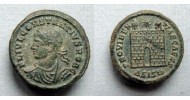
Constantine II as Caesar. AE 3, Reduced Follis; Constantine II as Caesar; 317-337 AD, Trier, 323 AD 3,22 g. 19 mm RIC-412, officina P=1 (r3). Obv: CONSTANTINVS IVN NOB C Almost half-length consular bust r., laureate, holding eagle-tipped scepter in r. hand. Rx: BEATA TRAN - QVILLITAS Altar inscribed VO / TIS / XX, globe on altar, three stars above, .PTR followed by crescent in exergue.
The output of the mints at Londinium, Lugdunum, and Treveri served as an important source of propaganda for the entirety of the western empire during the first quarter of the fourth century AD. Constantine and Licinius both drew upon a variety of reverse designs in order to signify such ideas as strength, tranquility, and prosperity, though matters between the two were ever-unstable as war broke out between them in AD 316, most likely over a mutual envy and mistrust of one another. The resulting peace in early AD 317 was short-lived and tensions were only subdued, as hostilities once again gradually increased, culminating in the battle of Chrysopolis in AD 324, the execution of the Licinii, and the sole-reign of the house of Constantine.
A ‘happy tranquility,’ the beatas tranquillitas type conveys the tranquil state of the empire which Constantine and Licinius wished to promote.