

The roman legions on coins
An interesting niche in collecting roman coins are the legionary issues of Marc Antony, Septimius Severus,and Gallienus
Marc Antony
Issued before the Battle of Actium in 32 BC and likely minted at Antony's winter headquarters in Patrae (Greece), it was silver denarii such as this that Mark Antony used to pay his legions and fleet. With a lower silver content (copper having been added to the alloy) or even silver washed (fourré), these debased coins tended not to be hoarded but were in constant circulation and so are most often found in very worn condition or with bankers' assay marks. Seeking to associate himself with Julius Caesar, who had held the augurate, Antony too identified himself as augur; so one reads ANT AVG (abbreviating Antonius augurus); III VIR R P C abbreviates Triumvir rei publicae constituendae ("One of Three Men for the Restoration of the Republic"), which was adopted in 43 BC by Mark Antony, Octavian, and Lepidus when they formed the Second Triumvirate.

Septimius Severus
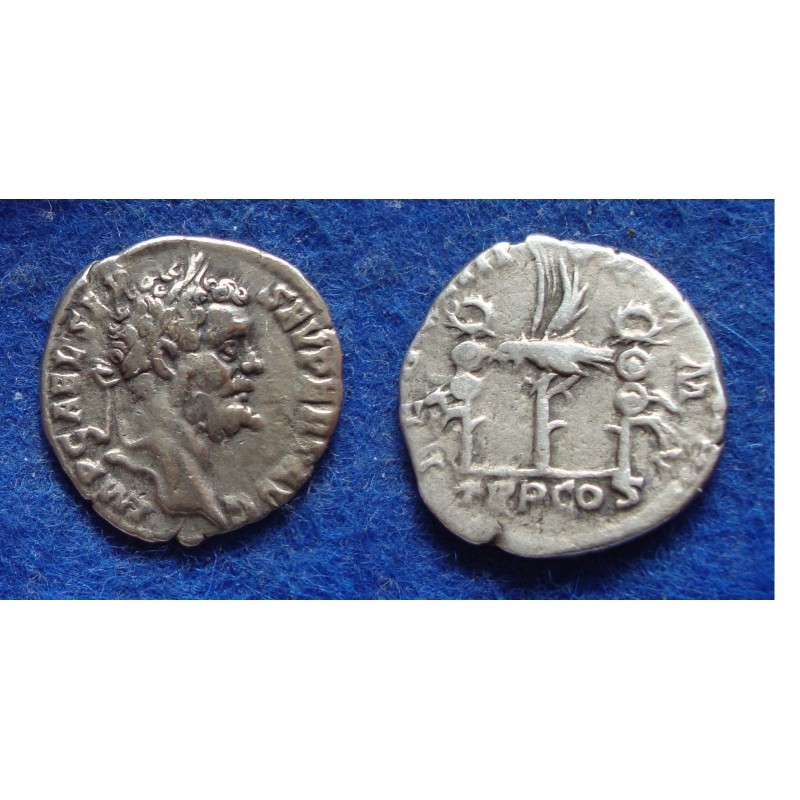
Septimius Severus issued a series of coins honoring the legions that supported his assumption of the Purple. These were struck in 193 AD from the Rome mint and in 194 from the branch mints in the Eastern part of the Empire. The reverse legends all include TRP COS in exergue and have a surrounding legend naming the legion being honored. Several Rome mint varieties are scarce or rare; there are no common Eastern mint legionary coins.
Gallienus
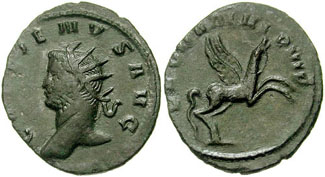
In 260, following the defeats of the revolts, Gallienus produced Antoniniani at Milan, honoring his different legions. Each legion or cohort is featured through the legionary badge on the reverse, along with the victory number and P F for Pia Fidelis. One coin type was issued for each of the three battles in which the unit participated. Victory V was against the Alemanni, VI was against Ingenuus and VII was against Regalianus.
2 Comment(s)
Leuk initiatief en goed geschreven. Je zou voor mij zelfs nog wat dieper kunnen gaan qua informatie. Overigens denk ik dat ook niet-numisten dit soort info leuk vinden. Ik zou zeggen, zoek een groot bereik. En nogmaals mijn complimenten!
Henk
Bedankt voor het compliment Henk!
Je ne vous savais collectionneur, trois superbe monnaie la première étant ma préférée; bravo et bonne continuation.
Leave a Comment