
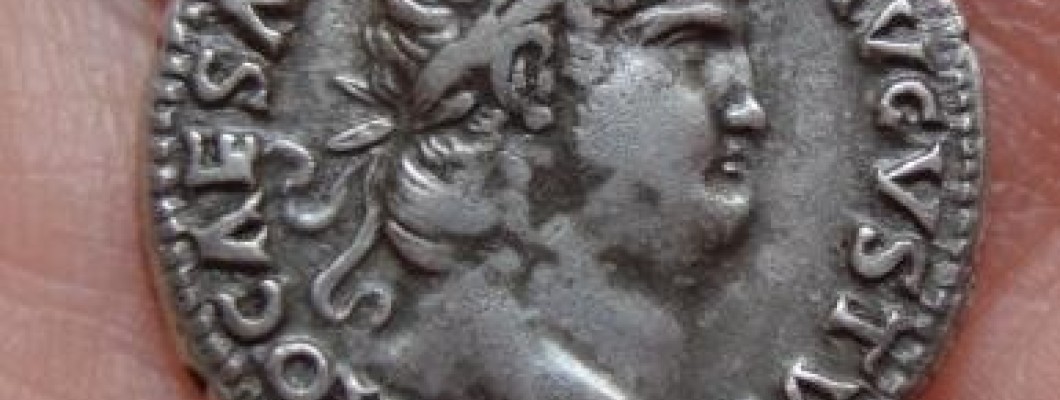
Roman coins and their value.
Many visitors of my site have similar questions when they browse through the coins that are for sale on my website: What is the actual value of this Roman coin? Am I paying too much? Is it a sound investment?
There are many ways to determine the value of a coin. It is not an exact science; it takes a lot of experience and earlier research to be able to determine the value of a coin easily. I can, however, give you a top twenty of my favorite ways to determine the value of a coin that grabs your interest.
1. Catalogues:
There are a number of special catalogues that state the average fetching prices for the most commonly known Roman coins. These are not fixed prices! A well-known catalogue series is: Roman Coins and their Values by David R. Sear. It’s a little outdated, but most copies have been reprinted and Part IV is now for sale. It’s quite an investment to buy them.
Another one, which has thankfully only one part, is: The Handbook of Roman Imperial Coins by Van Meter. It’s a good idea to buy them second hand on Amazon. It suggests price ranges and can be far from accurate but it still contains valuable information for the beginning coin collector.
There are also the Roman Imperial Coinage catalogues, a set of 13 volumes. RIC (Roman imperial Coinage) is the general abbreviation for a set of 13 volumes of identification catalogues on Roman coins. Even though it’s not up to date any more, it is the standard in the world of collectors. For the collector it is thrilling to find a coin, which is not mentioned in the RIC.
RIC references have become a standard in the world of collectors although it is not quite up to date any more due to so many new variations of coins being found. It is always a thrill to find a coin, which is not in RIC. Van Meter is often "VM" e.g. VM1234.
2. Auction sites:
On these sites the reached prices of the most important international auctions are archived. There are many but below I list my favorite ones:
i. www.acsearch.info
ii. www.cngcoins.com
iii. www.coinarchives.com
iv. www.wildwinds.com (ebay auction, prices are outdated!)
v. www.dirtyoldcoins.com
You can visit these sites and fill in the RIC number and actual prices are shown.
3. Gold.
On average these past years the price of a Roman gold coin has doubled. Gold is always a good investment.
4. Luster.
Yes you will find luster even in gold coins that have been struck almost 2000 years ago. We call them FDC. The prices fetched on these coins can double or even triple.
5. Rarity.
A coin of a rare Emperor or Empress (or a relative) fetches higher prices . A worn coin of Britannicus can still be terribly expensive to acquire.
6. Official Coins vs. Provincial Coins.
A lot of coins from rare emperors are struck in the Roman Provinces. These coins are a lot cheaper the official coins from, for example, the mint of Rome. A provincial coin can in some cases be as rare as the official ones.
7. Quality of artistry.
A lot of artists found employment in the mint industry, they were commissioned to make the portraits on the coin. One artist would be more artistic than the other. The best artisans were asked to make the stamp of gold coins. Sometimes also the silver coins will carry the stamp of their craftsmanship. Their prices are a lot higher. The quality of a portrait from Syria (Antioch, for instance) is poorer than the ones made in Rome. Which will lower the price.
8. Rarity.
Rare legends, busts or mints can fetch higher prices. A rare legend of Probus can sometimes be ten times more valuable than a Probus with a common legend. The same goes for Bust types.
9. Weight.
Heavy coins can have a higher value than lightweight ones. An Antoninian of 5 grams is more expensive than the same coin with a weight of 3,5 grams.
10. Centering.
A perfectly round coin that is nicely centered will yield you more money.
11. Silver wash.
In German: Silbersud. This refers to the silvered layer that was present on Follies and Antoninians when they were first minted. The better the state it is in the more valuable.
12. Popularity.
On the reverse side of a coin you can find images. Some topics are really sought after. For example: The Judea Capta series hailing from the era of Vespasian. It commemorates the Roman victory over Judea. The prices fetched by these coins are much higher than their RIC numbers would suggest. Other popular images are: The Coliseum, Ostia Harbor and Circus Maximas.
13. Forgeries.
There are some notorious fakes out there that are worth a lot. For example, there’s the Paduan by Giovanni Cavino from the 16th century. They have great artistic appeal and are worth hundreds of euros.
14. Fourree,
Also known as stuffed coins. In Germany they are called Suberat. These are gold or silver coins with a copper core. Sometimes you can only tell by the weight. They are official coins, not barbaric. They are difficult to recognize. Sometimes you can see the copper core showing through the thinning silver, or the surface seems a bit strange. Why they did this? Stealing gold and silver of course.
15. Provenance.
There are coins that can be bought with a full auction history (or ticket) or coins that have provenance from a well-known collection. Their “ancestry” is easy to trace and it makes them safe to buy.
16. “Plate Coins”.
These coins are mentioned and pictured in known reference works like RIC, Sear, Gobl, Moushmov, etc. These coins are more expensive than coins of the same grade.
17. Patina.
This is a bronze coins’ natural protection. Often green or dark green. The price grows up if the patina is appealing and intact.
18. Health.
Porous coins or coins with pitting or bubbles always send a collector straight into a state of alarm. A real danger is bronze disease. It is a green powdery deposit. Eventually a coin will be lost if not treated. Picture 2000 years of history slowly being eaten away.
19. Wear.
This is a simple one. Less wear equals more expensive. Still be vigilant though! Sometimes perfect coins are forgeries and there are really worn coins out there depicting rare emperors that are known fakes.
20. Rare denominations.
There are Quarter Follis, Quadranses, half Siliquas and Denarii by late emperors like Carinus that do not appear on the market often, because of this they are popular and generate high prices.
There is no doubt that this list is far from complete. It also demonstrates that it is not a simple matter to determine the value of roman coins. The best way to determine the value of a coin is to consult an expert if you are a starting collector and want to buy roman coins.
20 Comment(s)
Hello! Very informative article, thanks! Am afraid to have a few coins with 'bronze disease'. How can I treat this? I am far from Mare Nostrum in Kitale, Kenya, and only basic chemicals are available here. Many thanks for your consideration! Marcel
Dear Marcel,
It is a specialist job to treat coins with bronze disease. I have tried several things but the patina was destroyed or the disease came back. I allways send them to Andre Cardol of www.archeoplan.nl. The cost are around 15 euro per treated coin. I you want to experiment please visit this board:
http://www.forumancientcoins.com/board/index.php?topic=48881.0
best regards jeroen
hallo ik heb ooit ergens een munt gevonden ik keek net toevallig in mijn geschiedenis boek en zag daar opeens de zelfde munt in staan ik weet niet of hij echt is maar er staan dingen op die heel oud enzo zijn ik keek op internet bij romeinse munten en zag ik weer de zelfde munt staan ik weet niet of hij echt is maar hij is best zwaar( voor een muntje )... ik hoop heir snel antwoord op te krijgen
groet sam
Hallo Sam, stuur een foto naar romancoinshop@hotmail.com en je krijgt een antwoord van mij! Groet Jeroen
Ik heb u een email gestuurd jeroen. Groetjes
Vraagje, je hebt het over het benadelen van bronsrot......heb je daar tips voor?
Dat is altijd lastig, ik stuur ze op naar andre Cardol van archeoplan.nl
Hallo,
Ik heb in tunesie 4 oude romeinse munten gekocht maar ik weet niet of ze echt zijn. Hoe kan ik dat uitvinden?
Stuur foto's naar romancoinshop@hotmail.com en ik laat het je weten!
ga naar een museam
Beste ik heb een Romeinse munt maar ik heb geen idee van tijdperk of waarde
Stuur foto's naar romancoinshop@hotmail.com en ik help hem ermee
Beste , een vriend van mij heeft twee romeinse munten , zouden graag achterhalen van afkomst ervan
Stuur foto's naar romancoinshop@hotmail.com en ik help u!
Stuur foto's naar romancoinshop@hotmail.com en ik help u!
goedemorgen, ik heb onlangs 19 munten in bezit gekregen en zou graag meer informatie willen hebben over de herkomst van deze munten. Mij is verteld dat het roemeinse munten zijn.
Met vr gr Mario
stuur maar foto's naar romancoinshop@hotmail.com
Goedemorgen,
Ik heb in een muntenzakboekje van mijn een Romeinse munt aangetroffen die hij heeft gevonden tijdens de bouw van onze woning in Houten.
Ik zou graag willen weten waar deze vandaan komen en of deze iets van waarde heeft.
Ik lees graag je reactie.
groet,
Paul
Stuur maar een foto naar romancoinshop@hotmail.com
Geachte,
Een Egyptische kennis uit het hotelvak is in deze (corona)periode meegegaan met beroepsvissers en hebben wat romijnse of griekse munten mee opgevist. Hij heeft foto's opgestuurd met vragen.
De munten heb ik zelf niet kunnen zien. Riezen gaat nog niet. Mag ik deze foto's naar sturen voor
Uw menîng?
Mvg
H. Renden
Ja dat mag zeker info@romancoinshop.com
Hallo,
Een mooie Romeinse munt gevonden en zou deze graag willen laten restaureren. Kan dat nog steeds bij Archeoplan.nl ?
Groet
Michael
Beste,
Ik heb een stuk of 25 Romeinse munten die mijn vader vroeger verzamelde.ikzelf doe er niks mee en wil er een paar bewaren voor de leuk,zit informatie bij maar ook een hoop briefjes door elkaar geraakt,zou jij me kunnen helpen als ik een mailtje stuur om te kijken of er waarde aan zit?
Met vriendelijke groet,
Fabio
Ja is prima romancoinshop@hotmail.com
Ik ken iemand die meer dan 900 goud gevonden, maar hij weet de prijs niet.
Hoi ik heb Romeinse munten wie weet het wat is waarde en hoe kan ik verkopen kunt u iemand interesse of informatie geven
Ik heb een Griekse en een Romeinse munt, ik wil graag weten welke dat zijn (serie etc.) en hoeveel ze waard zijn. Volgens mij zijn ze van brons.
Ik heb een gouden Aureus van Verpasianus (76) Rome.
Helaas heeft de ploeg deze munt geraakt. Is deze munt nog te restaureren?
En wat is de eventuele rest waarde?
Groeten Willem.
Ik moet eerst kijken of dit werkelijk aankomt
Leave a Comment